

Hiking in Lefka Ori: An authentic trekking adventure in the White Mountains with Alternative Crete
If you want truly to understand the landscape and the “identity” of a mountain, look at the toponyms given by the shepherds—the oldest inhabitants of the Cretan highlands.
Lefka Ori (the White Mountains) in Chania is one of that landscapes. A world of stone, myth, and unparalleled natural beauty of West Crete.
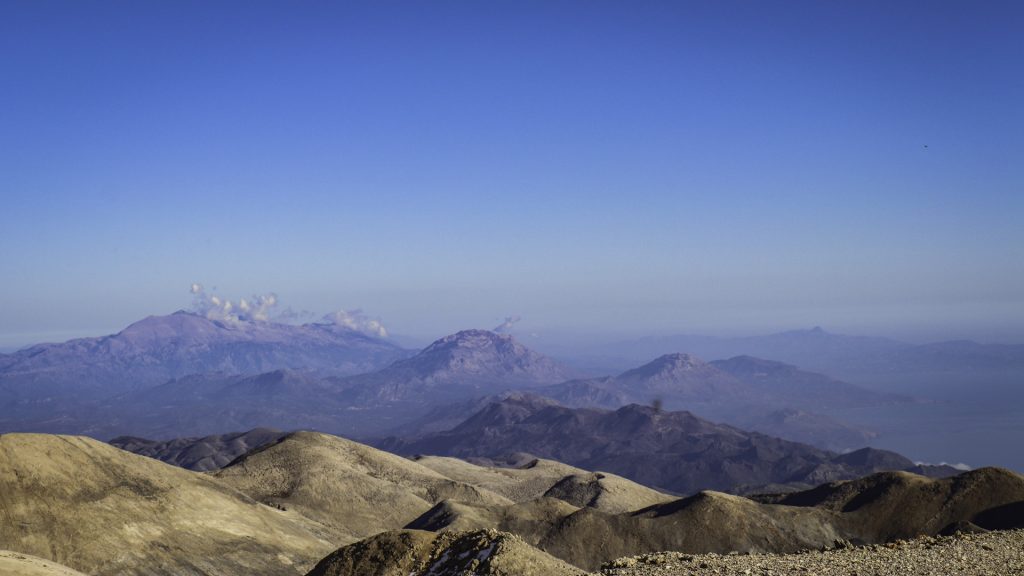
Lefka Ori: The Land of Stone and Moonscapes
In the Lefka Ori massif, names like Mavri Laκκi (Black Pits), Kakos Poros (Bad Passage), and Pavlia Chalara (Chalara -> ruins) set the stage. Many peaks are simply named “Mavri” (Black), a testament to the eerie, lunar landscape dominated by black, gray, and red rocks.
This arid, dry environment, devoid of vegetation, is a magical destination for hiking in Crete. It is a place that challenges your spirit and calls you to conquer as many summits as your soul desires.
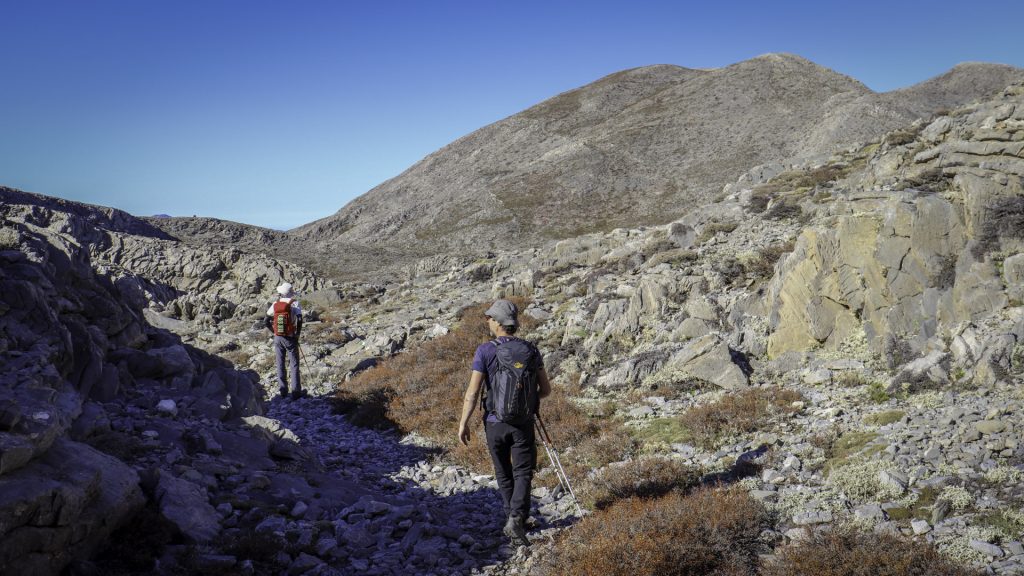
Climb to Pachnes: The Highest Peak of the White Mountains
While a landscape of boulders and high wild summits might not sound like the typical scenery for a trek, it is actually the ultimate destination for full-day trekking in Chania.
At Alternative Crete, we often choose a circular one-day hike into the heart of the range, aiming for the highest peak of Lefka Ori: Pachnes (2,453m).
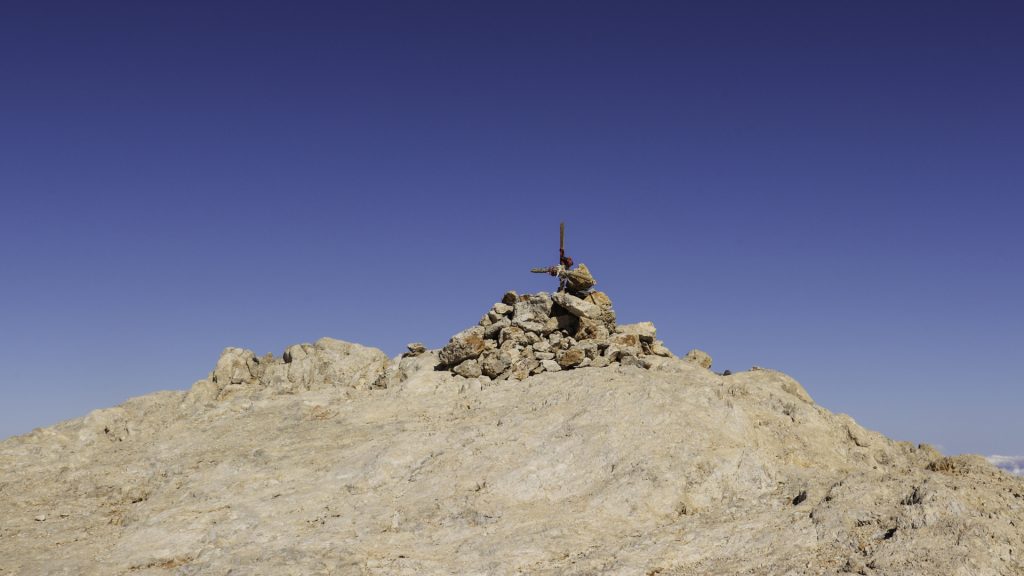
Approaching and the Katsiveli Plateau
Our trail leads us to the Katsiveli region, a small plateau in the center of the massif. This area is dotted with Mitata (traditional stone-built shepherd shelters) and the refuge of the Mountaineering Club of Chania.
In the past, locals practiced animal husbandry and even cultivated potatoes and legumes here. Today, the abandoned drystone walls—built without binding material—stand as silent witnesses to this history. The path through the peaks of Sternes, Bournelos, and Modaki feels like walking through a grand “elegy of stone.”
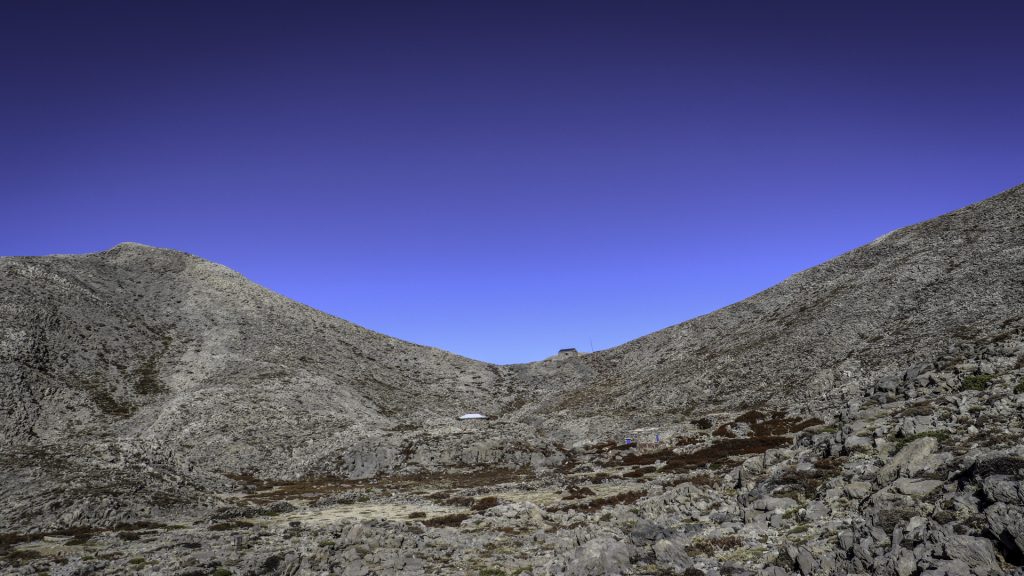
Exploring the Mountain Trails: The Pyramid of Modaki
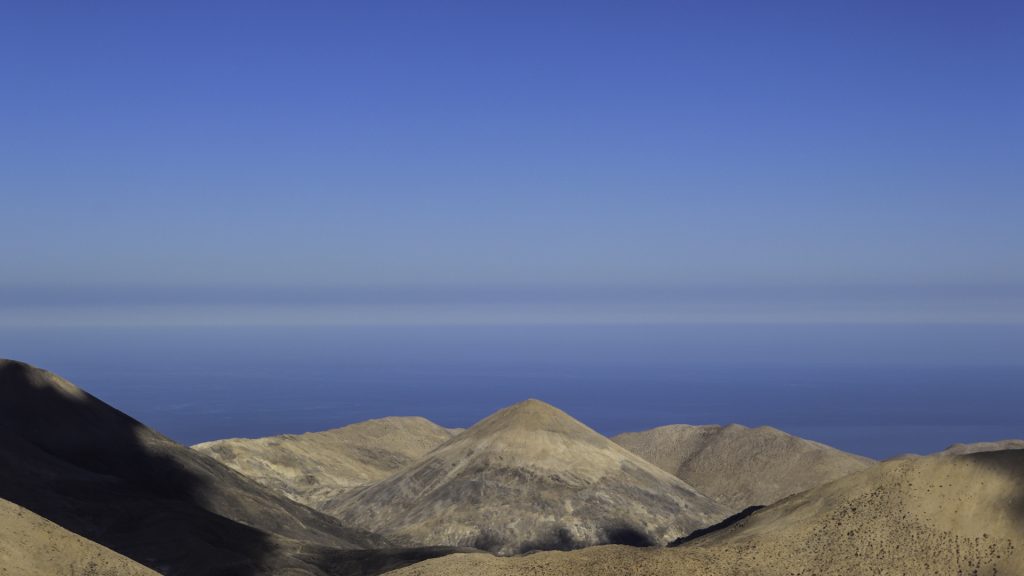
As we navigate with our hiking maps, we pass the western slopes of Modaki peak (2,225m). This unique summit rises like a pyramid, looking as if a Pharaoh constructed it in the middle of the Cretan range.
The hike from the plateau to the Pachnes summit is demanding, featuring steeper slopes and impressive passes with breathtaking views. After five hours of delightful hiking, reaching the top at 2,453m provides a sense of stillness that is rare and divine.
Clear Skies: Views from the Islet of Pachnes
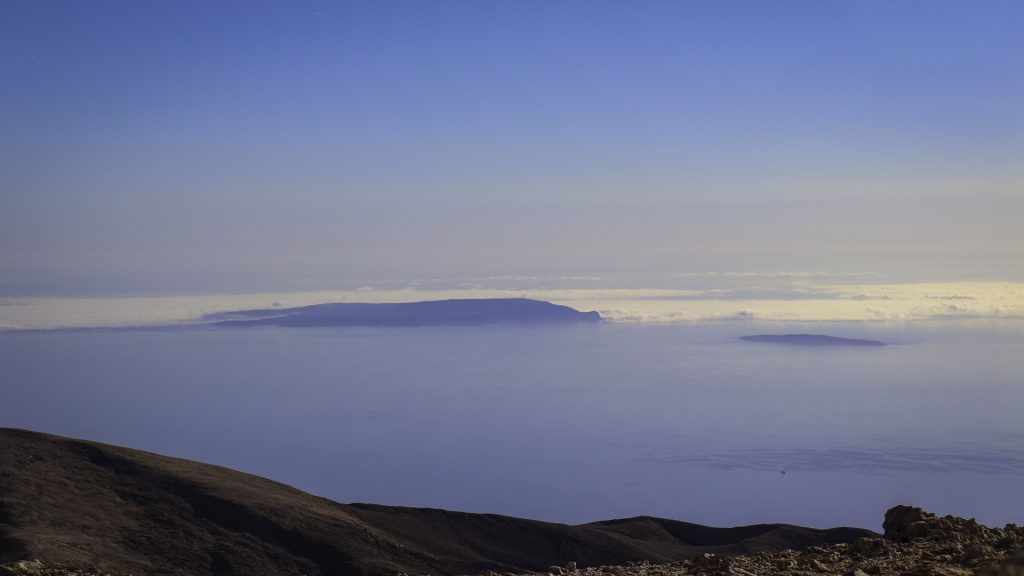
Standing at the highest point of Lefka Ori, you witness a “mountainous sea”—fifty peaks over 2,000 meters rising around you like waves. From the “islet of Pachnes,” the perspective is staggering:
- To the East: The mythical Psiloritis (Mount Ida) appears so close you feel you could touch it. Also, the Asterousia Mountains and the “Kofinas” peak are visible on the horizon.
- To the South: The Libyan Sea and Gavdos Island, the southernmost point of Europe, floats in the Mediterranean, enchanting hikers just as Calypso once enchanted Odysseus.
- North and West: A sea of summits. The mountain Labyrinth of the Lefka Ori!
The return journey follows the classic ascent route, taking about 1.5 hours. While manageable in summer, this route becomes a serious alpine challenge in winter.
Discover the Cretan Soul with Alternative Crete
Closing a hiking cycle in the Lefka Ori mountains, helps you understand why hiking in Chania is a life-changing experience. It is an opportunity to meet the unadulterated Cretan soul that thrives on these mountain slopes.
When you walk these mountains and meet the locals, you realize why Cretans are “mountainous people.” With landscapes this powerful, your soul has no choice but to lead you to the heights.

Hiking, the way to discover a land
Closing this hiking cycle in Lefka Ori massif, you are understanding why hiking in Crete an experience is.
You have the option to walk on height paths and admire great views. The road trip until the beginning of the path is an opportunity to meet the Cretan soul that exists unadulterated on the slopes of the Cretan mountains.
You are feeling that the myth still exists everywhere on the island, and you see it and perceive it even when you stand on the highest peak.
Finally, when you will have walked enough in Crete and its mountains, when you will have gotten to know the locals better, then you will understand why the Cretans are mountainous people.
Because with so many mountains there is no other way, your soul leads you there.
