

Crete: A timeless journey through history, nature and tradition
With a history of over 3,000 years, starting from the great Minoan civilization to the present days, Crete has to offer the traveller unique images where ancient cities and settlements become one with the natural landscape. It is this combination of nature and history that gives Crete its unique character.
But the landscape comes alive with people. The Cretans, through their cultural tradition of gastronomy, music, dance and customs are the ones that complement the island’s character.
With all the above, Crete finds magic chemistry to be an ideal place for exploration, fun, and entertainment.
A place where you can find whatever you ask for!
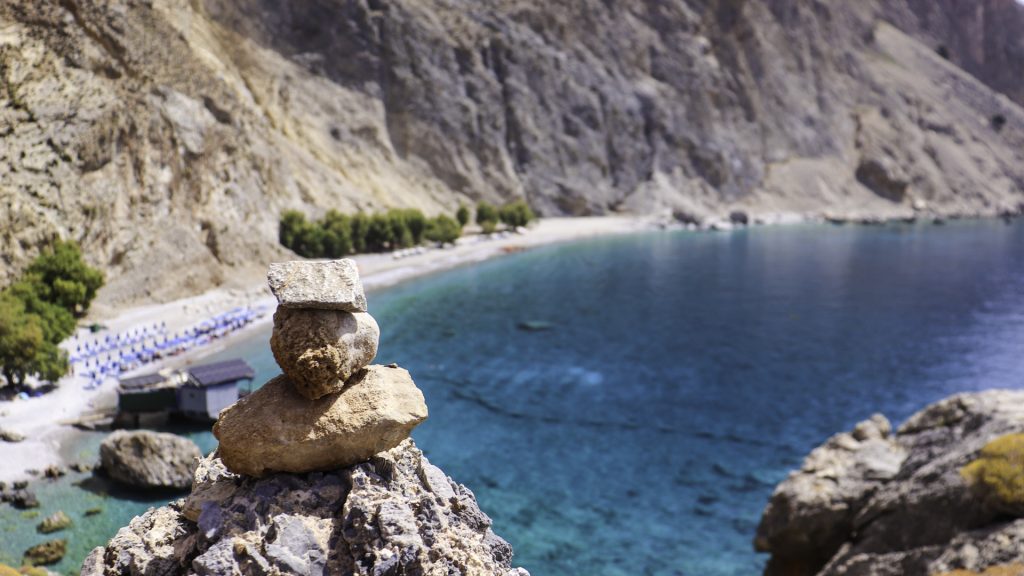
Crete’s climate: Year-round weather and outdoor activities
The climate of Crete is Mediterranean with warm, dry summers and cool, humid winters. Because of the mild climate, the weather is not too intense, and the meteorological changes are not sudden.
During summertime the temperatures reach up to 28 degrees and in July and August it reaches over 30 degrees. Despite those temperatures hiking can be a pleasant activity in higher altitudes or through the countless Canyons of Crete which usually end in exotic beaches.
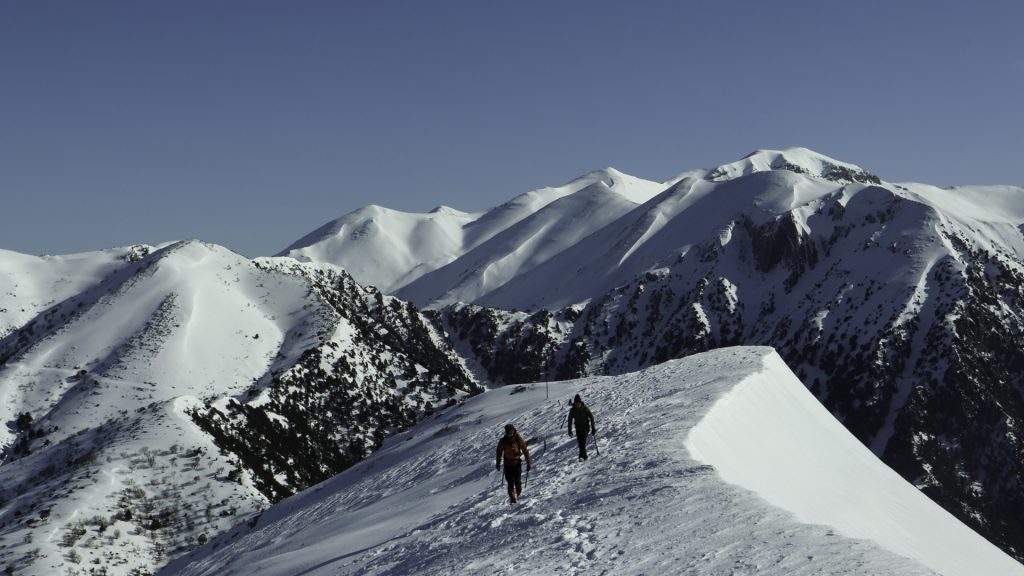
In winter time, mainly from December until April, there is heavy snowfall in the highlands and in the lowlands there is frequent rainfall and the average temperature is 15 degrees Celsius.
There is sunshine all year round! mainly from April to October and the ideal months for hiking in Crete are from April to June and September, October.
For the rest of the year the weather helps to enjoy hiking, bicycle, climbing etc. in the Cretan countryside and in combination with mild climate and low tourist season, any excursion is ideal, for any time of the year!
The wild soul of Crete: From rare herbs to the majestic Kri-Kri
In Crete there are 180 species of endemic plants that do not exist anywhere else. The flora of Crete consists of 1,800 species of plants and it plays a major role in the development of the islands unique flora and fauna being isolated from the mainland thousands of years.
In the semi-mountainous areas there is low vegetation while in the mountainous area of Crete we find thinly forests mainly pines, cypresses, holly trees, maples and more.
However, the Cretan land is rich in aromatic and medical herbs such as diktamo, plum, sage, rosemary, etc.
Many canyons of Crete offer an important refuge for plants and animals.
The Mountains are the natural habitat of large predatory birds such as the Bearded vulture (Gypaetus barbatus), the golden eagle (Aquila chrysaetos) and the griffon vulture (Gypaetus fulvus). These species build their nests on the slopes of large mountain ranges.
It is therefore likely that you will admire them flying between the mountains high in the sky.
If we are lucky, we might come across some of the only endemic mammals of Crete such as the Cretan wild goat (Kri-Kri), the Cretan dog and much less frequently the Cretan wild cat, “furogatos” in local dialect.
Cretan gastronomy: A 4.000-years-old culinary tradition and the Mediterranean diet
For visitors, exploring the island’s local cuisine is an additional journey of discovery and an important gastronomic experience. The largest island in Greece is a land in itself, with unique local dishes and a gastronomic tradition that still lives and thrives to this day!
The wild and primeval landscape of this unpretentious place is what inspires the Cretan diet.
With gorges and ravines wrapped in wild herbs, valleys overflowing with fruits and vegetables, and small scattered ancient vineyards, the Cretan land has been producing fruits and vegetables, legumes, wild greens and herbs for centuries. The raw materials of this 4,000-year-old culinary journey.
The quality and value of Cretan food is not only due to its rich land, but also reflects a whole cultural influence of centuries. Cretan cuisine combines ancient Greek, Byzantine, Arabic, Turkish and Venetian influences, which are reflected in its diverse flavours and recipes.
But what exactly are the secret ingredients of this world-famous culinary tradition?
Crete is famous for its Mediterranean diet, which is considered one of the healthiest in the world as it emphasizes fresh vegetables, olive oil, whole grains, fish and moderate wine consumption.
Good quality olive oil is essential and the basis of Cretan cuisine. The island produces some of the best olive oils in Greece as olives are abundant on the island and olive oil is a key ingredient in Cretan cuisine. Even desserts are usually prepared with olive oil, instead of butter.
This mountainous place has a variety of fresh vegetables such as tomatoes, cucumbers, eggplants and greens.
Wild herbs such as oregano, thyme and dittany are widely used as a seasoning in a variety of traditional dishes, such as Ntakos. The famous Cretan salad made with soaked dry bread (rusk), garnished with chopped tomatoes, feta or mizithra cheese, olive oil and herbs.
Animal fats are consumed only in moderation and in the event of an important celebration, wedding, etc.
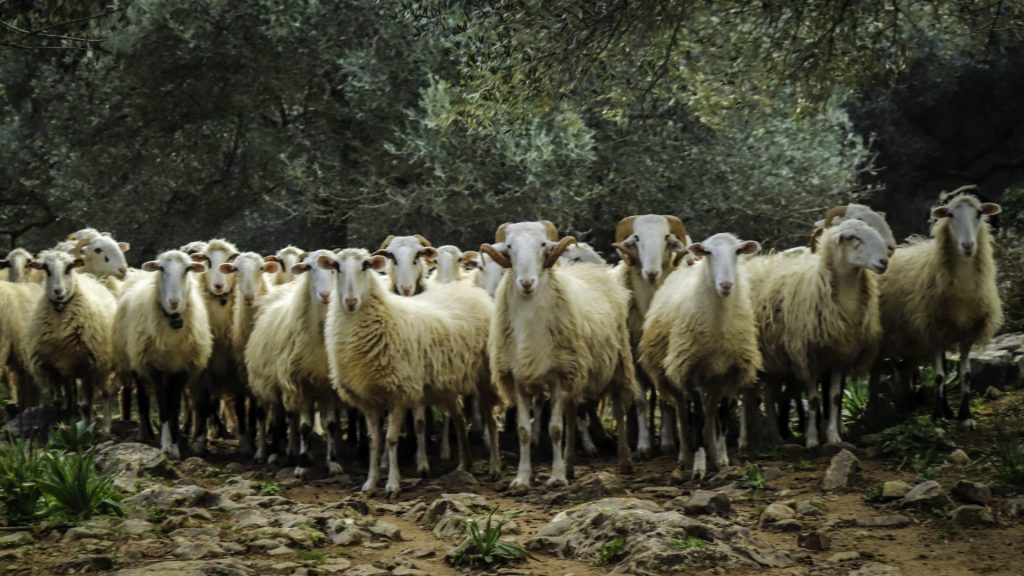
Lamb and goat dominate the dietary habits of the locals and the meat is usually prepared roasted, boiled or grilled.
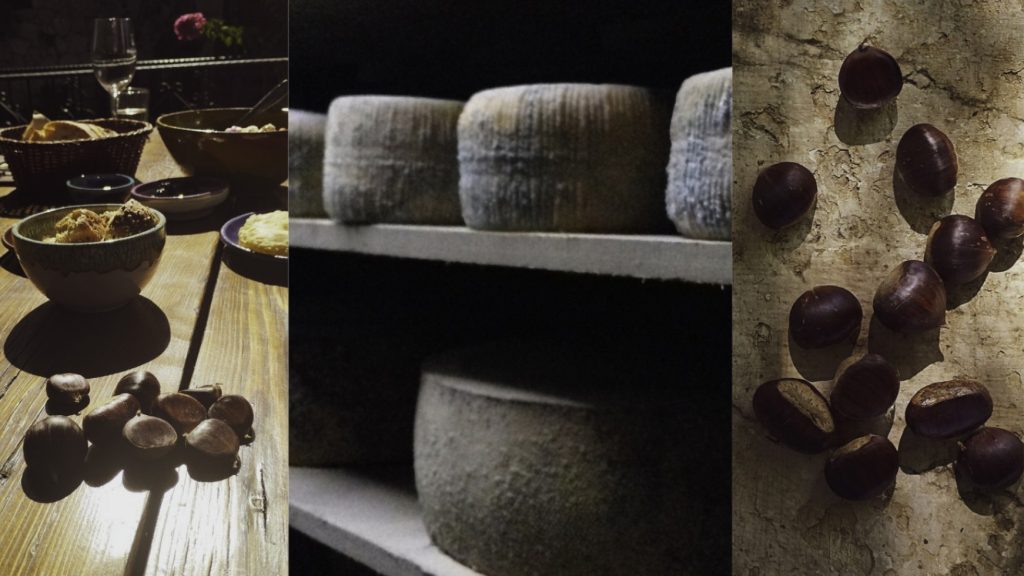
Crete is known above all for the varieties of cheese that “come out” from the “cheese holes” of the Cretan mountains.
The traditional art of cheesemaking, known for its cheeses, especially ”myzithra”, a soft or hard cheese made from goat’s or sheep’s milk, and ”graviera”, a hard spicy cheese, has not been forgotten in Mountainous Crete.
On the contrary, it is a living tradition that the new generation of Cretans continues to this day.
The Cretan vineyard could not be missing from the Cretan diet. The island has a long history of wine production, with local varieties such as Kotsifali and Mantilari.
However, raki, a traditional drink made from grape marc, plays a dominant role in Cretan life. This is why Cretans celebrate its production every autumn in the famous “rakokazana” (traditional raki-making pot), since it is produced by distillation.
The Cretan diet has multiple health benefits, and rightly so, it is said that Crete’s greatest treasure is its cuisine!
Cretan music and dance: The vibrant soul of island tradition
Cretan music is one of the most characteristic and richest cultural treasures of Greece. With deep roots in the history and tradition of the island, this music reflects the identity, soul and daily life of the Cretans.
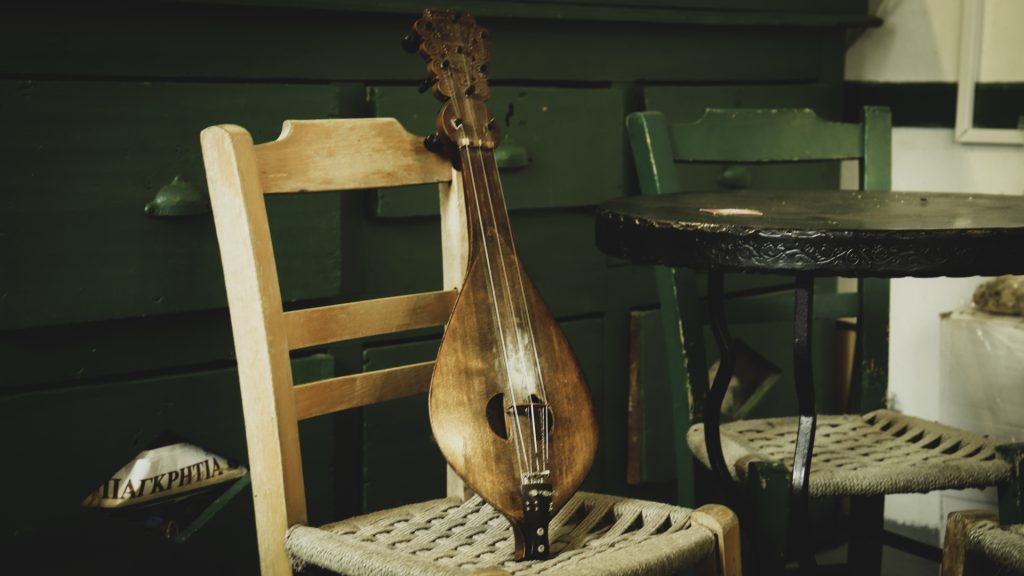
Regarding its characteristics, Cretan music stands out for its intense rhythmicist motif, the melodies often accompanied by traditional instruments such as the Cretan lyre, the lute. Rarely the mandolin and in some cases (mainly in Western Crete) the violin.
Songs often tell stories of love, heroism, and everyday life, while ritual dances play an important role in social and religious events.
One of the most famous genres of Cretan music is the “syrtos”, a rhythmic dance accompanied by dynamic songs. Also the “pentozali” (Pente=Five, Zalos=Step. That means five steps) is characterized by fast movements and lively rhythms.
The island’s songs often contain elements of melancholy, love, and revolutionary expressions, which reflect Crete’s rich cultural past.
Cretan music has been preserved throughout the centuries and continues to be a vibrant part of the island’s daily life, both in traditional festivals and fairs as well as in modern musical performances.
Furthermore, Cretan music has significantly influenced the wider Greek musical landscape, with many artists incorporating elements of it.
Cretan music is a precious heritage that unites the past with the present, keeping traditions alive and conveying the message of the island’s identity and cultural heritage to each generation.
Why Crete is the ultimate destination for hiking and outdoor adventure
Crete is far more than just a summer destination. It is a vast, open-air museum and a natural playground waiting to be explored on foot. Choosing Crete for your hiking and outdoor activities means immersing yourself in a landscape where 5,000 years of history meet untouched natural beauty.
As you trek through the island’s legendary canyons and rugged mountain ranges, you aren’t just exercising—you are walking the same paths as the Minoans, breathing in the scent of 180 endemic plants, and catching glimpses of the majestic Kri-Kri or the rare Bearded Vulture. The island’s unique Mediterranean climate ensures that whether you are hiking the E4 European Long Distance Path in the spring or exploring coastal trails in the autumn, the conditions are always ideal for adventure.
But the true magic of a Cretan excursion lies in the rewards that follow. After a day of exploring the wild countryside, there is no better feeling than refuelling with the world’s healthiest gastronomic tradition.
A meal rich in premium olive oil, local graviera, and mountain herbs—accompanied by a glass of wine or raki—is the ultimate recovery.
And if you are lucky enough to encounter a local festival, the rhythmic sound of the Cretan lyre will remind you that on this island, nature and culture are inseparable.
Experience the authentic spirit of Crete—where every trail tells a story.
